When Did Reading Become Something We Measure?
Note One
5 July 2026
By Aimee
Somewhere along the way, reading became something we measure.
We count how many books we have read this year. We set ambitious targets in January and check our progress by summer. We celebrate finishing one book before wondering what should come next.
Perhaps that is inevitable. We count all sorts of things these days. Our steps. Our sleep. The books we read have quietly become another number to keep track of.
Yet, the books that remain with us are rarely the ones we finished the quickest.
They are the ones that made us stop.
A sentence that asks to be read again. A paragraph that sends our thoughts somewhere else entirely. A page that has us closing the book for a while, looking out of the window or carrying its ideas with us throughout the day.
I have never finished a book and remembered how quickly I read it. I remember where I was sitting. I remember how it made me feel. I remember the page I folded over because one sentence or passage would not quite leave me alone.
I have always been fascinated by language: where words come from, how they change over time and how some seem to carry their meaning within them. Linger is one of those words. Say it aloud and it almost refuses to hurry.
The books that stay with us invite that same way of reading.
Some books carry us forwards, urging us to read just one more page before bed. Others seem to reward a slower pace, inviting us to linger over a page before moving on or to sit with an idea for a while.
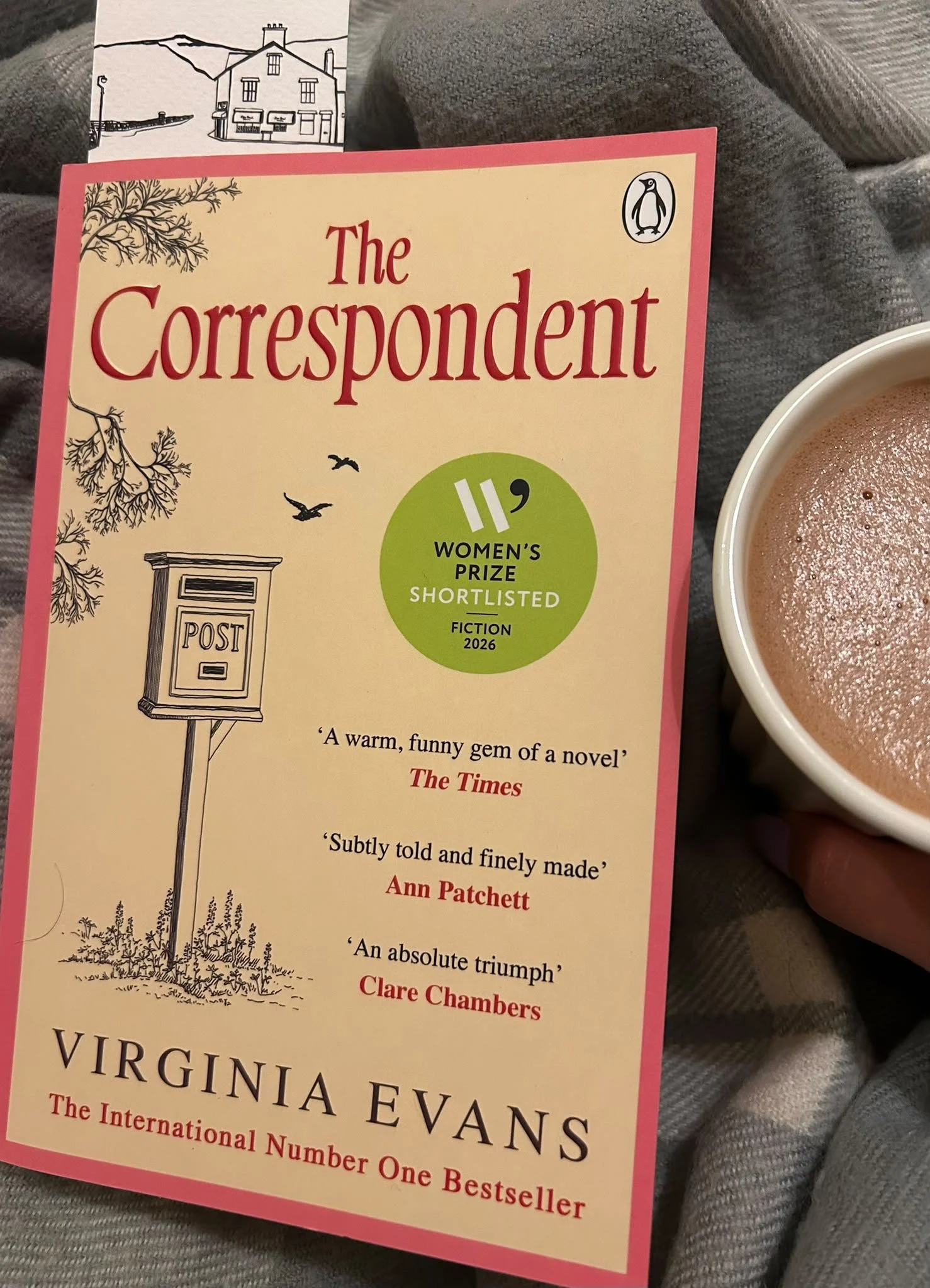
Recently, I have been reading The Correspondent by Virginia Evans in exactly that way. Rather than racing through the letters, I found myself reading, pausing and reflecting. One exchange between the characters stayed with me for an afternoon, not because anything dramatic happened but because I kept returning to it while I was doing other things.
Perhaps that is what reading slowly really means.
Not making a book last longer.
Simply giving it room to become part of our days.
The places where we read become part of those memories too. When I think about favourite books, I almost never think about the story alone. I remember a favourite chair while rain tapped against the window. A quiet corner of a café. The last pages of a novel on a train, secretly hoping the journey was not over just yet.
Perhaps that is why some books never really leave us. They carry with them the place where we first met them and the version of ourselves we were at the time. Returning to a favourite novel years later is never quite the same. We notice different passages and find ourselves underlining sentences we somehow missed the first time.
Slow reading is not only about taking our time with a new book. It is also about returning to books we have loved before and discovering that they still have something new to say.
It is one of the reasons I rarely leave home without a book tucked into my bag. Not because there is always an afternoon waiting to be filled, but because ten unexpected minutes can be enough. Some of my favourite reading has happened in moments I never planned for.
At Words and Water, we hope to make space for that kind of reading.
Not reading more.
Reading slowly.
Reading with care.
Returning to favourite passages. Talking about them over coffee or on a walk. Making space for the quiet moments after the final page, when a story begins to settle into everyday life.
To linger.
(I've just noticed how often that word appears.)
Enjoyed this Note?
Our newsletter, Letters from Words and Water, arrives every every month with reflections, book recommendations and news of upcoming gatherings.