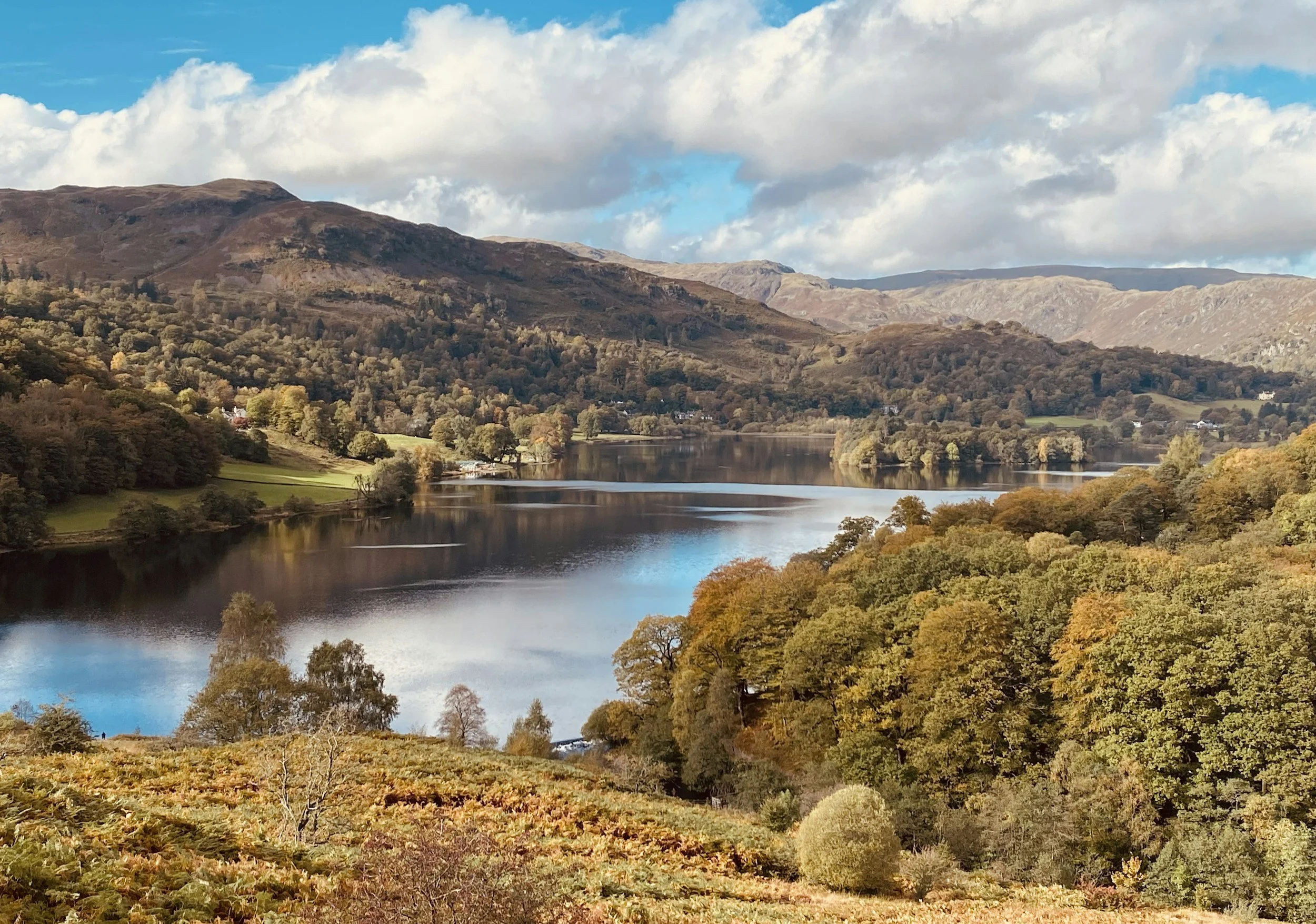
There are places that seem to hold stories in their landscape. Grasmere is undoubtedly one of them. Surrounded by fells, woodland and water, this beautiful corner of the Lake District has inspired poets, writers and creative minds for centuries.
In this edition of Around the Table, we are exploring Grasmere’s rich literary heritage, from William and Dorothy Wordsworth to the landscape that continues to inspire readers and writers today.
What makes Grasmere such a special and distinctive place within the Lake District?
It’s the combination of everything. Grasmere has an intimacy that perhaps some of the larger Lakeland landscapes don’t have. The lake, surrounding fells, woodland and village all sit together in a way that feels wonderfully connected.
There is a real sense of harmony here, but it is a landscape that is constantly changing. The light, the weather and the seasons give it a different character every time you visit.
Grasmere is inseparable from the story of William Wordsworth. How important was this landscape to his writing?
It was enormously important. Wordsworth lived at Dove Cottage in Grasmere from 1799 to 1808, a particularly significant period in his creative life.
He found inspiration in the natural world around him, but what makes his poetry so enduring is that he wasn’t simply describing beautiful scenery. He was exploring the emotional relationship between people and nature. His writing encouraged readers to look more closely at the ordinary things around them: a walk, a flower, a familiar landscape or a moment of quiet reflection.
What was it about the Lake District that attracted so many writers during the Romantic period?
The Romantic poets were fascinated by nature, imagination and emotion. The Lake District offered an extraordinary setting for exploring those ideas.
Writers such as Samuel Taylor Coleridge and Robert Southey were also closely associated with the area. Together, these literary figures helped establish the Lakes as an important centre of literary and cultural life. They were not simply visiting to admire the scenery. They were living within the landscape and allowing it to influence their thinking and their work.
Dorothy Wordsworth’s journals offer such a wonderful insight into everyday life in Grasmere. What makes her writing so special?
It is her extraordinary attention to detail. Dorothy noticed the things that others might overlook: the flowers, the changing weather, the trees and the small moments of everyday life.
Her Grasmere Journal gives us a very personal picture of the landscape and the people who lived there. When you read her observations, you begin to experience the place through her eyes. It is a reminder that sometimes the smallest details tell the most wonderful stories.
Do you think walking and observing the landscape can change the way we experience literature?
Absolutely. Walking gives you time to notice things that you might otherwise overlook. There is a lovely connection between walking and reading. Both encourage you to slow down, become more observant and allow your thoughts to wander. That is part of the magic of the Lake District. You can walk a familiar path and still discover something new.
How does the changing landscape and rhythm of the seasons influence the character of Grasmere?
Every season brings something different.
Spring brings new growth and a sense of renewal. Summer is full of life, while autumn brings beautiful colours and a quieter atmosphere. Winter can be wonderfully atmospheric, with mist hanging over the water and the fells feeling particularly dramatic. The quieter seasons offer a special opportunity to appreciate the landscape and experience the village at a gentler pace.
Do you think places like Grasmere encourage us to slow down and reconnect with the things that matter?
Yes. There is something about being surrounded by such a beautiful landscape that naturally encourages you to pause. Everyday life can become busy, and it is easy to lose sight of the things that bring us pleasure.
Whether it’s walking, reading, spending time with friends or simply sitting and looking at the view, being somewhere like Grasmere gives you the opportunity to reconnect.
What is it about combining books, landscape and shared experiences that makes such a special combination?
Books have a wonderful ability to bring people together, and sharing that experience in a beautiful setting makes it even more meaningful. The Lake District has such a rich literary history, so there is a natural connection between the place and the experience of reading. You might spend the morning exploring the landscape, the afternoon enjoying a book and the evening talking about what you’ve read with others.
Sometimes the most memorable experiences come from having the time and space to enjoy simple pleasures and good company.
If you were recommending one literary experience to someone visiting Grasmere for the first time, what would it be?
We would encourage them to visit Dove Cottage and discover more about the lives and writing of William and Dorothy Wordsworth. But we would also suggest taking a walk around Grasmere itself and allowing time to experience the landscape.
Perhaps take a book with you, find somewhere to sit and simply enjoy being there. Understanding the literary history is wonderful, but experiencing the landscape that inspired it is something quite different.
Finally, if Grasmere could be captured in a book, what kind of story do you think it would tell?
It would be a story about connection: our connection with nature, history, other people and ourselves.
It would be a story that changes with the seasons, with different characters and perspectives, and one that rewards you for taking your time.
Perhaps that is what makes Grasmere so special. It is a place you can return to again and again and always find something new.
Some stories are best discovered slowly, one page, one conversation and one walk at a time.
